Apostolic Dawn
Before Armenia was a Christian kingdom, it was a Christian mission field — and the missionaries, tradition insists, were apostles themselves. In the first century, St. Thaddaeus and St. Bartholomew, two of the Twelve, carried the Gospel across the Armenian Highland, preached in its valleys, and were both martyred on its soil. From their witness the national church takes its proudest title: Apostolic — founded not by later councils or royal decree, but by men who had walked with Christ.
The claim is ancient and continuous. Monasteries rose over the traditional sites of both apostles' tombs — the monastery of St. Thaddeus (the "Black Church") and that of St. Bartholomew — and pilgrims have sought them for well over a millennium. By the third century, Christian communities were rooted deeply enough in Armenia to draw persecution from its pagan kings. Among the first martyrs the church remembers are the virgin saints Hripsime and Gayane, whose deaths, the chroniclers say, set in motion the king's madness and the events of the great conversion. The stage was set for one of history's great reversals.
The Pit, the King & the Year 301
The story of Armenia's conversion turns on two men bound together by blood and providence. Grigor — remembered as St. Gregory the Illuminator (Գրիգոր Լուսավորիչ) — was the son of the nobleman who had assassinated the king's father. When his identity was uncovered, King Tiridates III had him thrown into Khor Virap, the "deep pit," a dungeon in the shadow of Mount Ararat. Tradition holds he survived there some thirteen years, sustained by a widow who lowered bread into the darkness.
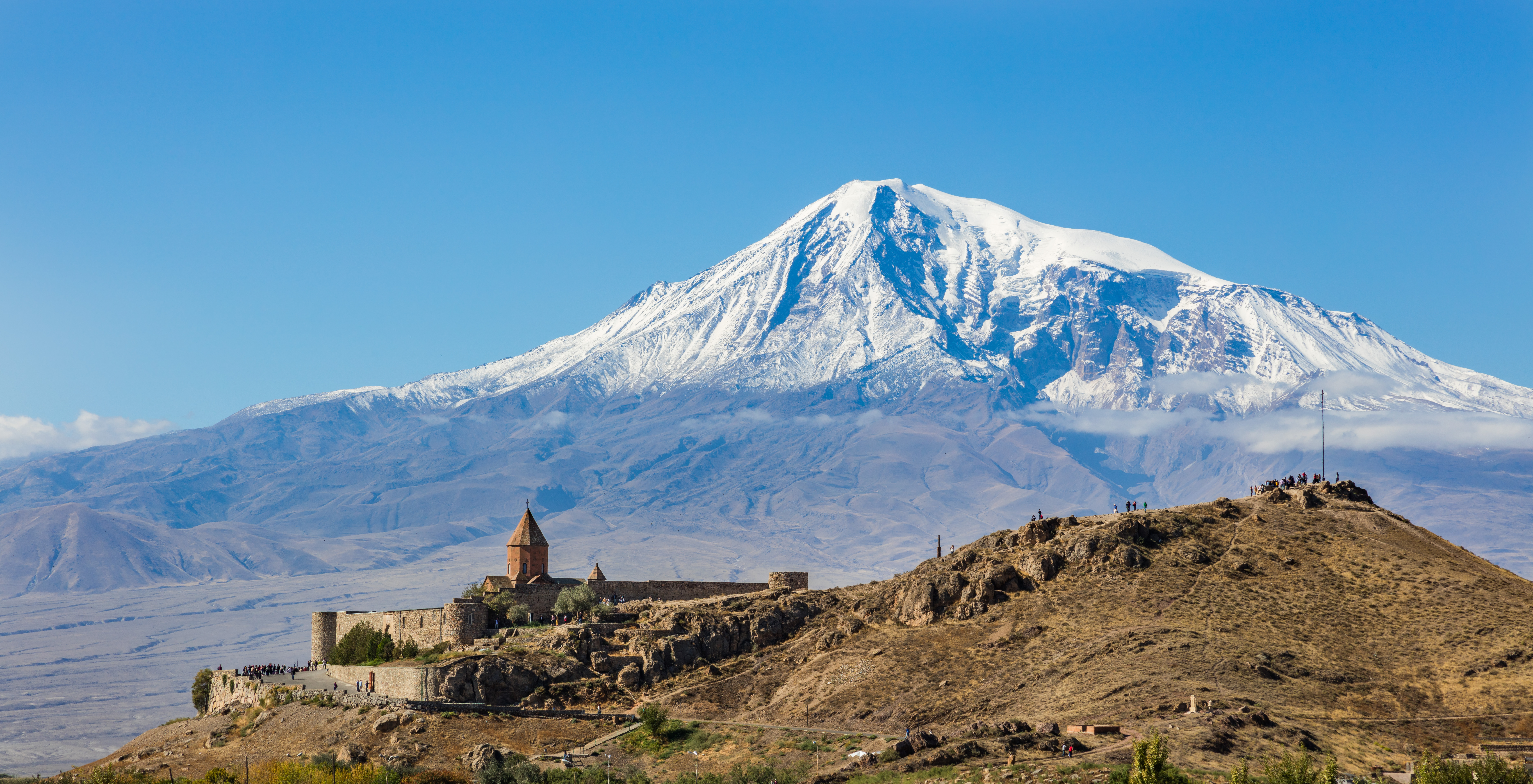
When the king was struck by a devastating illness — the chronicles describe a descent into madness — a vision revealed that only the prisoner in the pit could heal him. Gregory was raised from Khor Virap, cured Tiridates, and converted the court. In 301 AD the king proclaimed Christianity the religion of the Armenian state — a phrase worth pausing on: the first state in the world to make Christianity its official faith, a dozen years before Rome extended even tolerance at Milan, and nearly a century before it adopted the faith itself.
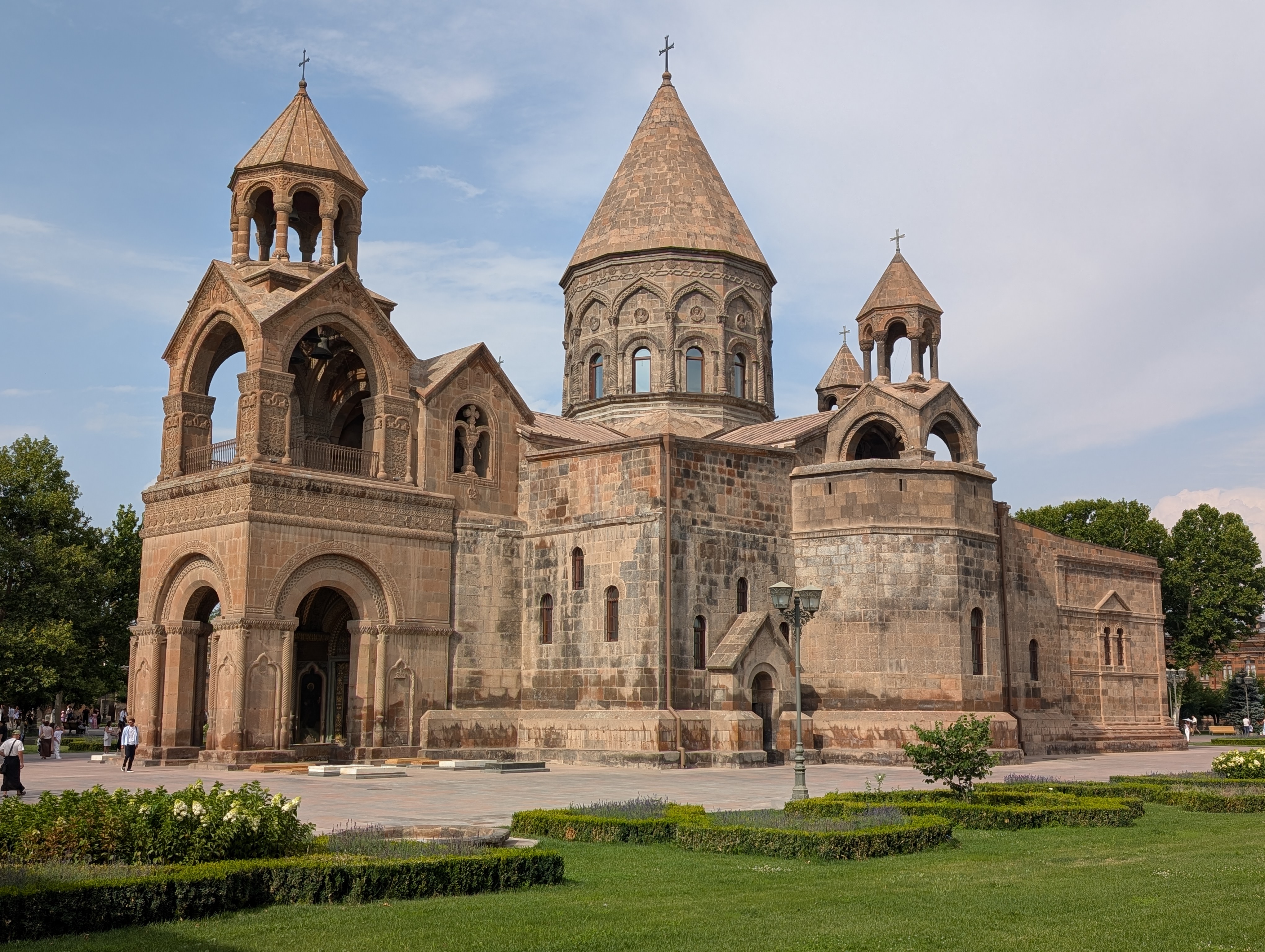
Gregory, consecrated the first Catholicos of All Armenians, founded a cathedral where a vision showed him Christ descending with a golden hammer to strike the ground. The place was named Etchmiadzin — "the Only-Begotten descended." Its cathedral, begun c. 301–303, is among the oldest in the world, and it remains the Mother See of the Armenian Church today.
An Alphabet Made for Scripture
A century after the conversion, the young church faced a quiet crisis: its Scriptures and liturgy lived in Greek and Syriac, languages the people could not read. The answer, around 405 AD, was an act almost without parallel — the monk-scholar Mesrop Mashtots, backed by Catholicos Sahak the Great and King Vramshapuh, invented an entirely new alphabet: 36 letters (later 38) shaped precisely to the sounds of Armenian, created for one purpose above all — to translate the Bible.
The first sentence ever written in the new script was chosen from Proverbs: "To know wisdom and instruction; to perceive the words of understanding." The Armenian Bible that followed was so masterly that later scholars called it the Queen of Translations. A "Golden Age" (Ոսկեդար) of literature erupted in the fifth century — histories, theology, poetry — and the Church still keeps a feast for its Holy Translators: a nation that canonized its linguists.
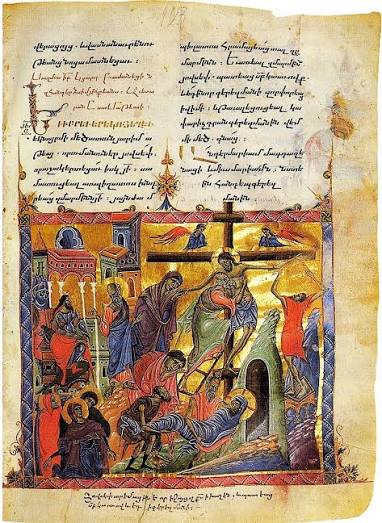
The alphabet did more than carry Scripture: it made Armenians culturally unassimilable. Through fifteen centuries of conquest and dispersion, the script — and the Book it was built for — remained the spine of the nation. To this day the Church's liturgical language is Grabar, the classical Armenian of the fifth-century translators.
Avarayr — The Price of Faith
In 451 AD, Sasanian Persia demanded that Armenia abandon Christ for Zoroastrianism. The nation refused. On 26 May 451, at the field of Avarayr, the vastly outnumbered Armenian army under the sparapet (commander-in-chief) Vardan Mamikonian met the imperial host with its war elephants. Vardan fell; the field was lost; the faith was not. It is the rarest kind of battle — a military defeat kept forever as a spiritual victory. Armenian resistance ground on for a generation until the Treaty of Nvarsak (484) guaranteed freedom of Christian worship.
Death not understood is death; death understood is immortality.
Yeghishe, historian of the Vardanank — 5th centurySt. Vardan and his 1,036 fallen — the Vardanank — are commemorated every year, and his name has been given to sons, streets, and statues of the Armenian spirit ever since. The message of 451 became the covenant of Armenian identity: the nation may lose everything except its faith.
A Church Apart — the Oriental Orthodox Path
While Armenia bled at Avarayr, the wider church met at the Council of Chalcedon (451) to define how Christ's divinity and humanity are united. Preoccupied with survival and loyal to the older formula of St. Cyril of Alexandria, the Armenian Church did not receive Chalcedon; at the Synod of Dvin (506) it formally set its own course. It thus belongs to the Oriental Orthodox family — with the Coptic, Ethiopian, Eritrean, Syriac, and Malankara churches.
The Armenian position is miaphysite: in the incarnate Christ, divinity and humanity are united in one nature, "without confusion and without change." It is emphatically not a denial of Christ's humanity. Modern dialogue has confirmed what the centuries obscured — the division was largely one of vocabulary. Joint declarations with the Catholic and Eastern Orthodox churches now recognize a common faith in the same Christ.
The Badarak — Liturgy of Heaven on Earth
What a visitor actually sees and hears in an Armenian church
Step into an Armenian church on a Sunday morning and you enter the Surb Badarak (Սուրբ Պատարագ) — the "Holy Sacrifice," the Divine Liturgy whose core has been sung for over fifteen centuries, still in the classical Grabar of the translators. Incense rises; a choir answers the deacons; and at the heart of the church, instead of the icon-screen of the Byzantine world, hangs a great curtain, drawn and opened at the solemn moments like the veil of the Temple.
Two ancient peculiarities mark the Armenian altar: the eucharistic bread is unleavened, and the wine is offered unmixed with water — usages the church has defended since the early Middle Ages as signs of the unity and purity of Christ. Around the liturgy stands the treasury of the sharakans, the canonical hymns composed across a thousand years — from the age of Sahak and Mashtots to Nerses Shnorhali, "Nerses the Graceful," the 12th-century catholicos-poet whose hymns are still sung at every service.
In the early 20th century the priest-composer Komitas gave the Badarak the choral setting most often heard today — folk-rooted, austere, and radiant (his story is told in Volume II). And beside the altar books, one book above all entered Armenian homes: the Book of Lamentations of Narek, kept under pillows and beside sickbeds — Scripture's neighbor in the affections of the people.
Stone Prayers — the Monastic Civilization
Nowhere did faith and landscape fuse as completely as in Armenia. Monasteries were set like jewels in the country's most improbable places — carved into living rock, balanced on gorge cliffs, folded into red canyons — and around them grew schools, scriptoria, and universities that carried Armenian civilization through the darkest centuries.
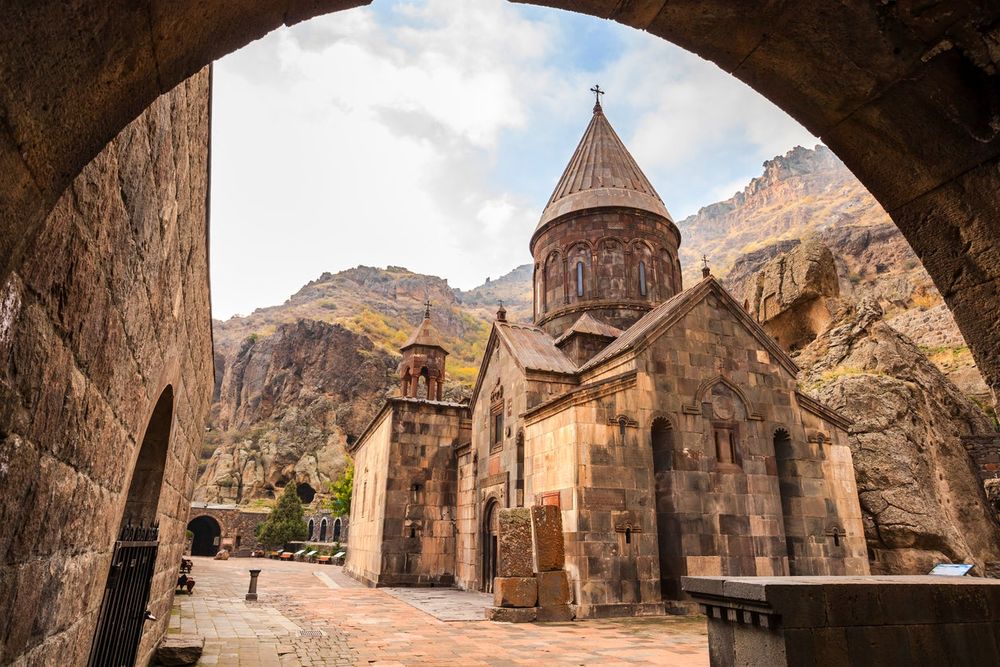
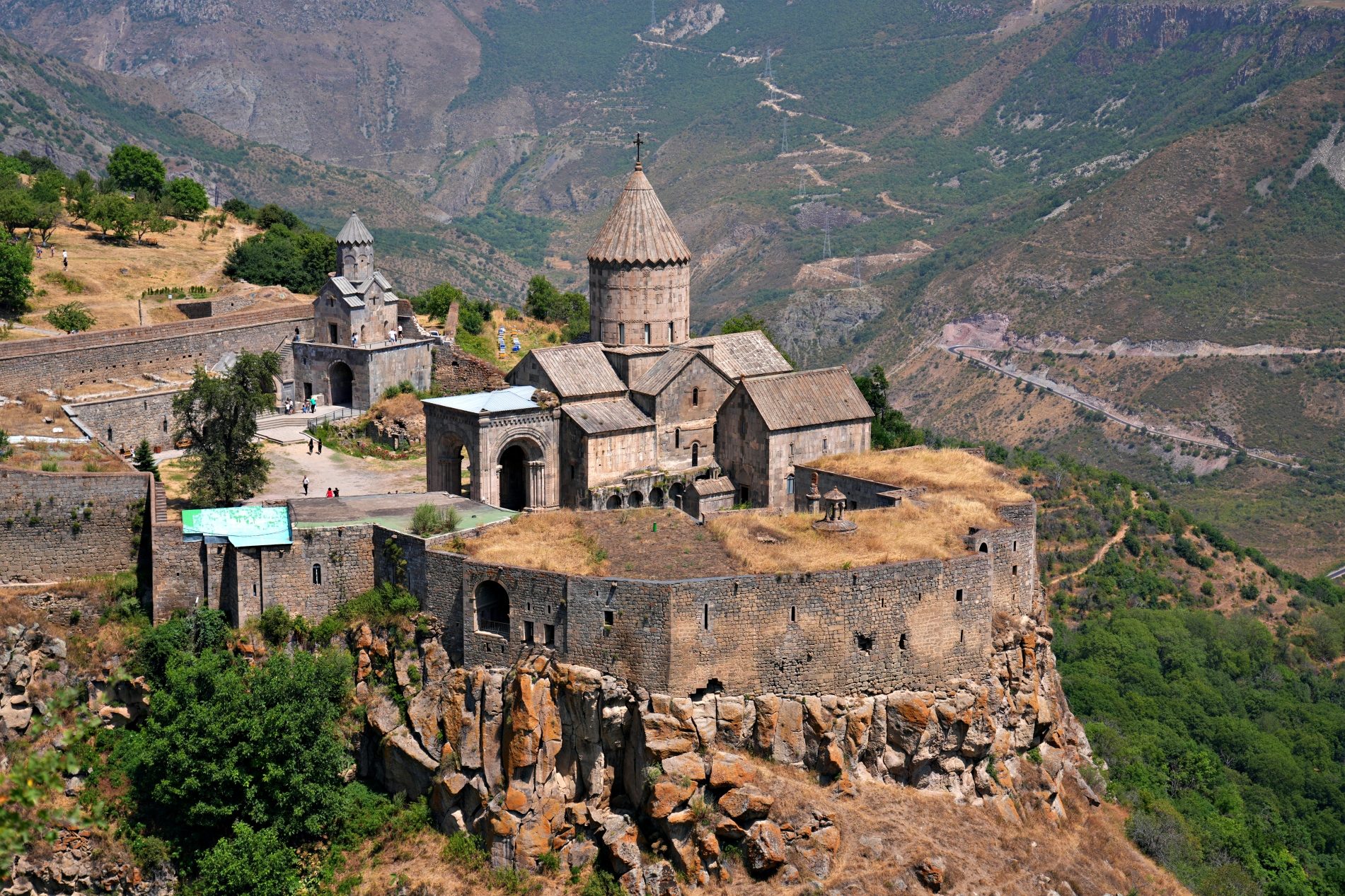
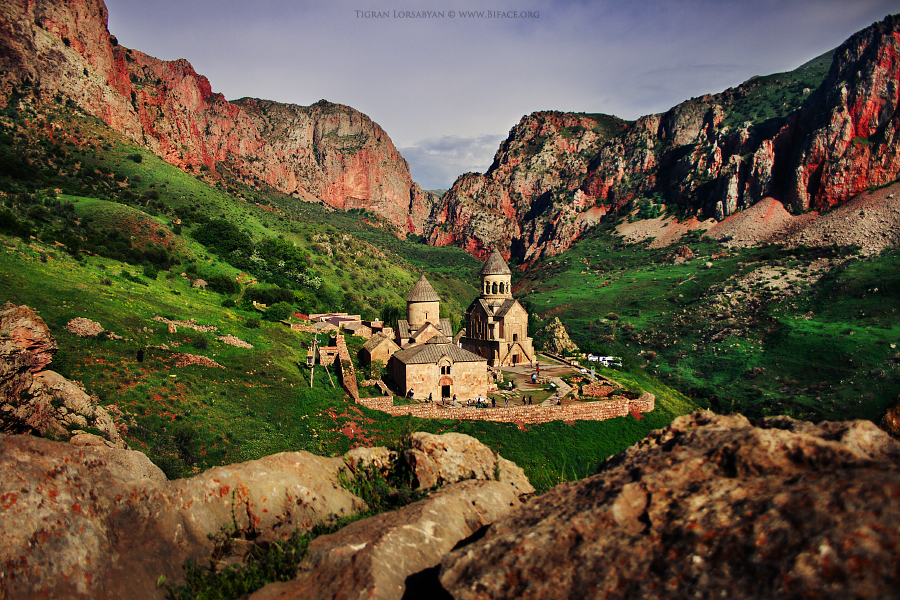
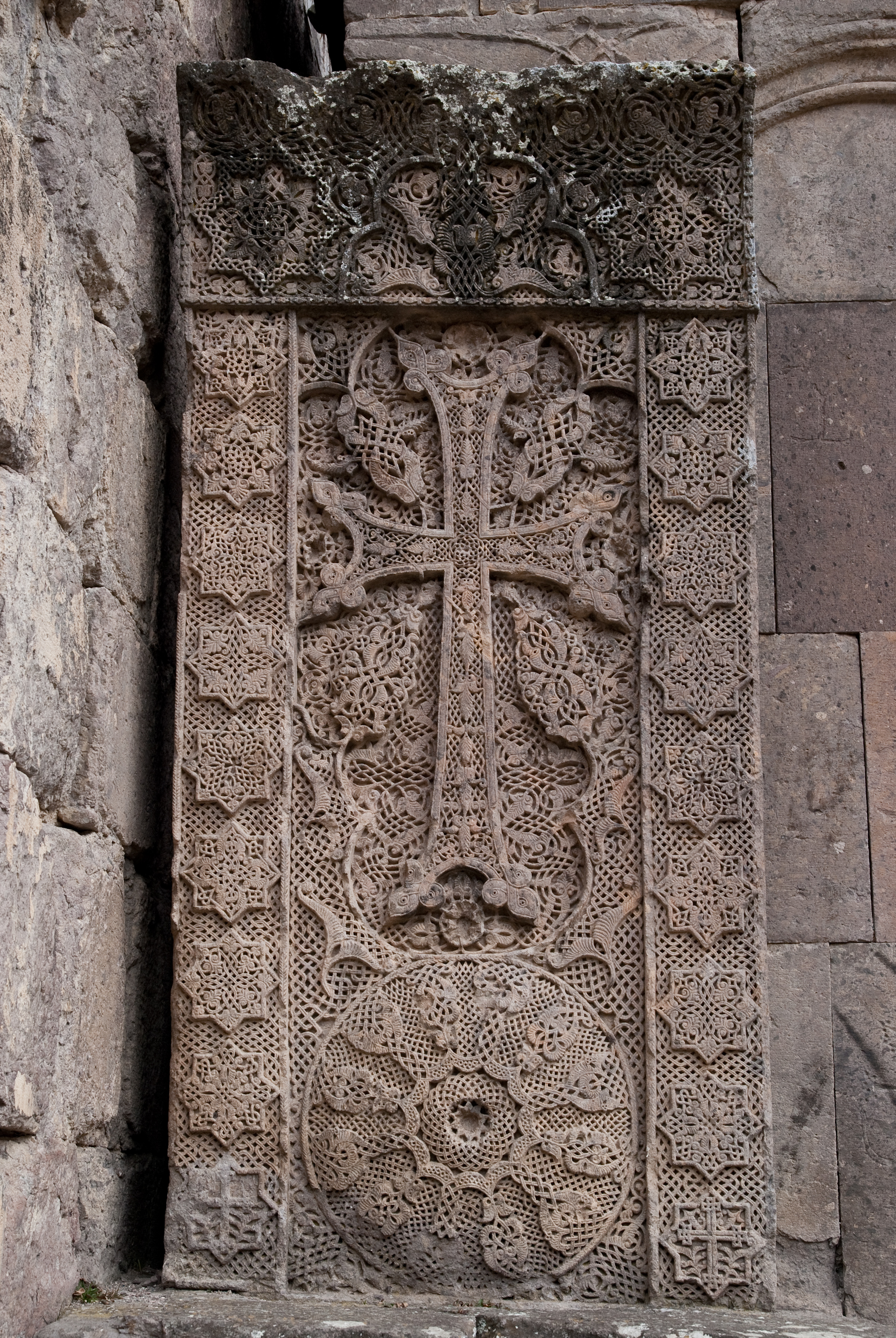
Alongside Geghard, Tatev, and Noravank stand Haghpat and Sanahin — twin medieval academies and UNESCO sites — and the school of Gladzor. The pattern repeated for a thousand years: the monasteries copied and illuminated the manuscripts; the manuscripts preserved the language; the language preserved the people. Even Armenian church architecture taught the world — the domed, cross-plan churches of the 7th century are studied as forerunners of forms Europe would discover only centuries later.
The Voice from Narek
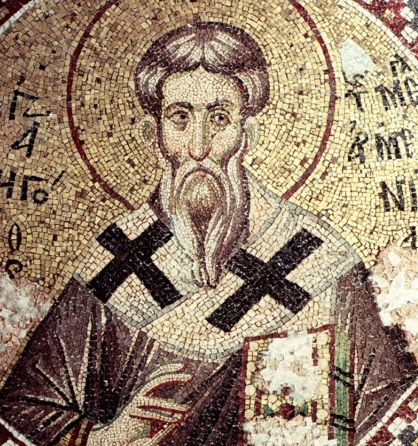
Around the year 1000, in a monastery on the shore of Lake Van, the monk Grigor Narekatsi — St. Gregory of Narek — composed the Book of Lamentations (Մատեան ողբերգութեան): ninety-five prayers of such psychological depth and verbal music that Armenians came to treat the book itself as a source of healing, kept beside the sick and the dying. He called the prayers "conversations with God from the depths of the heart." It is the summit of Armenian sacred literature.
Recognition eventually crossed every boundary of the divided church: in 2015, Pope Francis declared Narekatsi a Doctor of the Universal Church — one of only a few dozen figures so named in two thousand years, and a son of the Armenian Apostolic tradition honored by Rome itself.
The Living Church
How the ancient institution is organized — and celebrated — today
The Armenian Apostolic Church today serves a worldwide faithful of some nine million, organized around four ancient sees. Supreme among them is the Mother See of Holy Etchmiadzin, seat of the Catholicos of All Armenians. Beside it stand the Catholicosate of the Great House of Cilicia (since 1930 at Antelias, Lebanon — heir of the medieval kingdom's church), and the two patriarchates of the dispersion: Jerusalem, whose Cathedral of Sts. James anchors the Armenian Quarter of the Old City, and Constantinople.
Every seven years, at Etchmiadzin, the Catholicos blesses the Holy Muron — the consecrated oil of baptism and ordination — pouring a portion of the old vessel into the new, so that, tradition says, an unbroken thread of the oil descends from the age of Gregory the Illuminator itself. The calendar keeps its own poetry: at Trndez in February, newlyweds leap over bonfires; at Vardavar in midsummer — a feast with roots older than Christianity — the whole country douses itself in water; in August the first grapes of the harvest are blessed at the feast of the Assumption.
The modern era has brought the ancient church back to the world's center stage: in 2001 the 1700th anniversary of the conversion was celebrated with the first-ever papal visit to Armenia, and in 2016 Pope Francis prayed at Etchmiadzin and Khor Virap. And on 23 April 2015, on the centenary eve of the Genocide, the church performed the largest canonization in Christian history — declaring the Holy Martyrs of the Armenian Genocide saints, transforming a century of mourning into a liturgy of resurrection.
Exile, Catastrophe & Endurance
When the highland kingdoms fell, the church moved with the nation — to Cilicia, to the printing houses of Venice and Constantinople (the first printed Armenian book appeared in Venice in 1512), to every port of the dispersion. Then came the abyss. In the Genocide of 1915, the church was targeted with the nation: clergy were among the first arrested and killed, and centuries of churches, monasteries, and manuscripts in the Armenian heartland were destroyed. Yet in exile the church became the ark — in Aleppo and Beirut, Marseille and Fresno, it regathered the survivors around the liturgy and the language.
Seven Soviet decades of enforced atheism followed in the homeland; the church bent and did not break, guided through the era by figures such as Catholicos Vazgen I (reigned 1955–1994), who shepherded the faithful from the Terror's aftermath to the eve of independence. With 1991, the Mother See returned fully to public life — consecrating new churches, new muron, and a new generation of clergy for the oldest national church on earth, still keeping the covenant of 301.
Sources & Further Reading
- Mother See of Holy Etchmiadzin — OfficialThe Armenian Apostolic Church's own portal
- Catholicosate of the Great House of CiliciaThe Antelias See — official site
- Armenian Patriarchate of JerusalemSts. James and the Armenian Quarter
- Encyclopædia Britannica — Armenian Apostolic ChurchScholarly overview of doctrine and history
- The Matenadaran, YerevanThe great archive of Armenian manuscripts
- UNESCO — Etchmiadzin & ZvartnotsWorld Heritage listing
- UNESCO — Geghard and the Upper Azat ValleyWorld Heritage listing
- UNESCO — Khachkar CraftsmanshipIntangible Cultural Heritage inscription